 Call us: 800 899 4766
State, Local & Education

The challenge: more demands, limited resources
Solutions built to enhance public service delivery.
Solutions built to enhance public service delivery.



We make it easy to get started.
Frequently asked questions
How can state agencies prepare data for AI and automation while AI governance policies are still evolving?
Preparing for AI doesn't require waiting for perfect policy. It requires establishing clean data hygiene and automated privacy guardrails at the ingestion stage. Iron Mountain equips state leadership to build an AI-ready foundation that is safe by design, no matter how regulations shift.
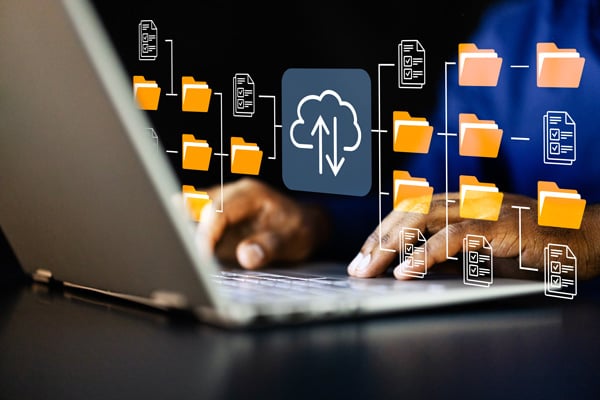
State agencies safeguard citizen privacy through automated detection, classification, and redaction of PII before files ever feed an AI model. Consolidating physical and digital records into a single, searchable repository breaks down departmental silos and embeds metadata labeling—ensuring future automation runs strictly on trusted, verified assets.
How can state and local government agencies modernize and digitize legacy records without straining personnel?
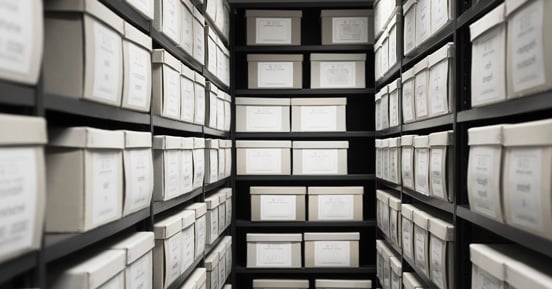
Iron Mountain can act as an extension of agency teams, providing a hands-free digitization experience. We pack, index, transport, and digitize your physical files at our secure facilities with highly-vetted expert employees - your staff never needs to lift a box.
The Iron Mountain team uses Smart Suite technology to rapidly categorize legacy archives, identifying what can be immediately destroyed according to your own retention rules, drastically reducing the volume of files you actually need to digitize. In fact, our research has found that less than 45% of your inventory requires digitization.
We can also provide full professional services, supplementing your team with our own expert records managers, information governance professionals, and general operational support specialists.
How does digital records modernization improve citizen experience and accelerate public records request response times?
Modern citizens require government services to move at the speed of the private sector. By digitizing high-demand records and integrating them into a searchable database or inside Iron Mountain InSight, staff can fulfill Sunshine Law, FOIA, and other record requests in minutes.
Iron Mountain helps transform citizen services into digital-first experiences, even when paper-based mail is still required. Our Digital Mailroom digitizes, extracts, and classifies data from incoming paper forms to accelerate processing time for benefits, licenses, and permits, letting you deliver results faster for your citizens.
How does Iron Mountain help school districts and universities digitize permanent student records and cumulative files while maintaining FERPA compliance?
Managing decades of cumulative files, special education records, and permanent transcripts consumes valuable school space and creates major compliance risks under the Family Educational Rights and Privacy Act (FERPA).
Iron Mountain delivers a secure, end-to-end digital transformation for educational institutions:
- FERPA-compliant chain of custody that ensures student records are tracked, transported, and scanned using strict security protocols that protect student privacy at every stage.
- Automated data extraction and metadata indexing using Intelligent Document Processing (IDP) extracts key data fields like student ID, name, graduation year, and transcript type to make files instantly searchable within your Student Information System like PowerSchool or Canvas.
- Converting manual, multi-day transcript searches into instant digital fulfillments saves administrative staff hundreds of hours annually.
How can educational institutions handle end-of-life IT asset disposition (ITAD) for 1:1 student Chromebooks, laptops, and classroom technology?
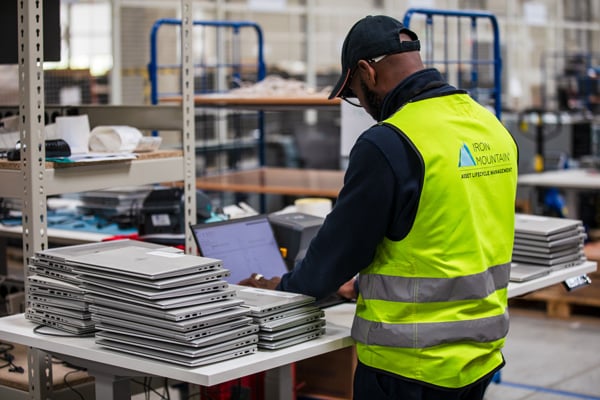
Managing thousands of student Chromebooks, tablets, and faculty laptops requires a secure, sustainable disposition strategy that prevents data leaks and meets environmental regulations.
Iron Mountain streamlines district IT asset disposition through:
- NIST 800-88 data sanitization, ensuring local drives and device storage are devoid of sensitive data to federal-grade standards. Drives may also be shredded, doubly guaranteeing that student data cannot be recovered.
- Local logistics and district-wide device deployments and retrievals directly from schools or IT warehouses can be scheduled during summer refresh windows.
- Zero-landfill policies to guarantee that e-waste is kept to a complete minimum. Devices may be refurbished for reuse within the district, remarketed for value recovery, or recycled at the component level to ensure that no raw materials go to waste. Districts receive Landfill Avoidance Certificates to support local sustainability goals.
How can understaffed school districts clean up legacy records archives without overspending or burdening administrative staff?
Basements, boiler rooms, and portable classrooms across school districts are often filled with old financial files, human resources folders, and expired student records. School staff do not have the time to sort through them box by box.
Iron Mountain accelerates legacy cleanup using our Smart Records Cleanup Suite, using:
- Defensive retention planning that cross-references your physical archives against state-specific educational record retention schedules to identify what must be kept, what can be digitized, and what is eligible for disposition.
- Smart Sort Technology that brings together human capability and technology to manage and separate expired records from records to be retained, reducing unnecessary storage volumes without heavy administrative lifts.
How does Iron Mountain protect student Personally Identifiable Information (PII) when preparing educational data for AI and analytics?
As schools and universities adopt AI for predictive analytics, personalized learning, and administrative automation, protecting sensitive student data is paramount.
Iron Mountain provides secure, automated guardrails before data enters analytics pipelines:
- Automated PII and PHI redaction capabilities to identify and redact sensitive fields from documents before they are fed into machine learning or AI-driven tools.
- Role-based access controls (RBAC) are put into place to ensure that only authorized faculty, administrators, or registrars can view specific classifications or student or financial data.
- Connecting disparate digital information systems and records repositories across admissions, financial aid, campus health, and alumni relations into a centralized environment allows for simpler, easier information governance.